


What does it take to start a business in Germany when, alongside the business idea, the language, bureaucracy and a new system also have to be mastered? Around 50 participants came together for the kick-off of our Founders Studio „Fokus.Migration“ at the Creative HUB to talk about precisely that. At „Start-ups, Migration & Pizza“, personal experiences, existing hurdles and, above all, mutual exchange took centre stage.
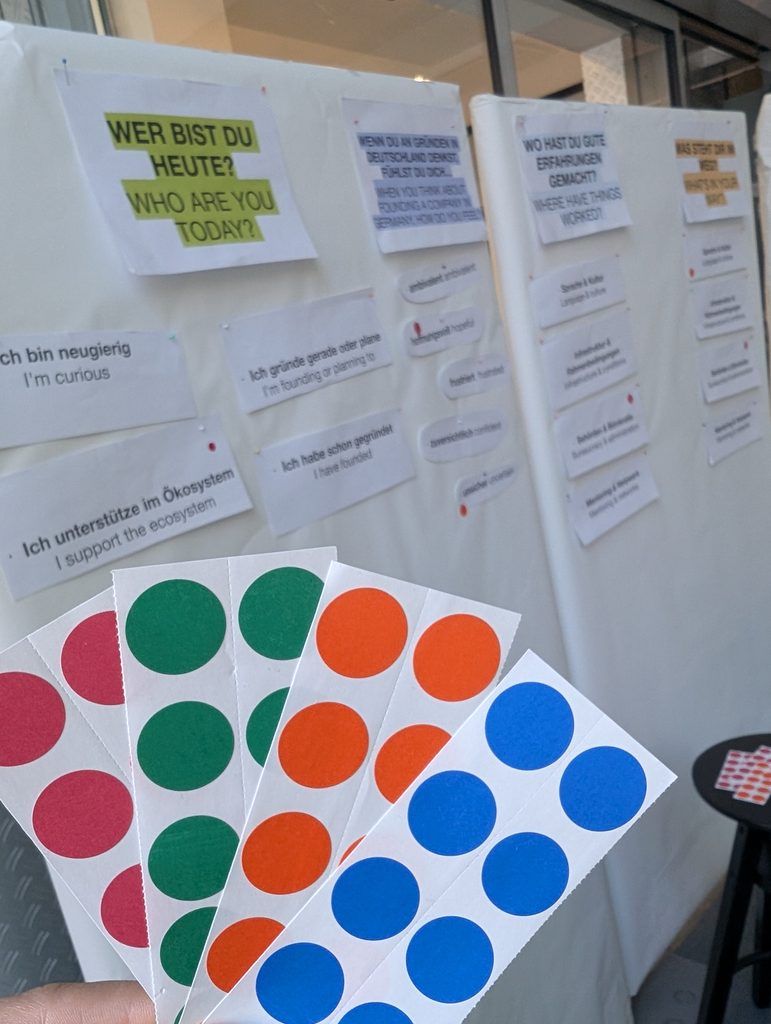
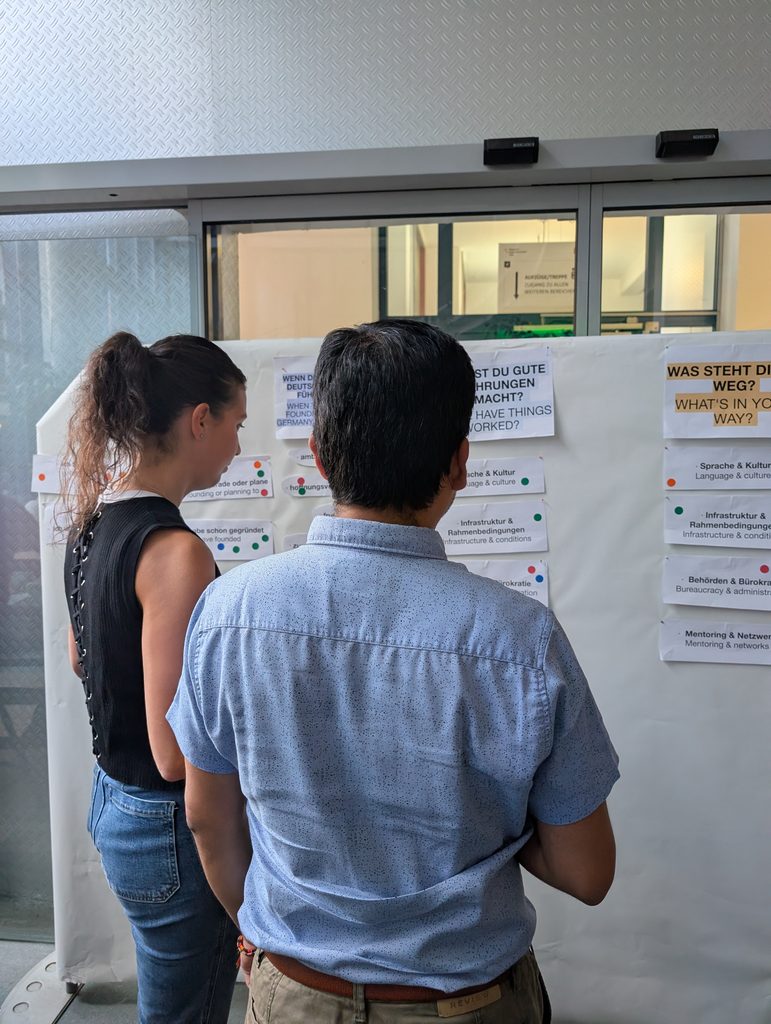
Even upon arrival, participants were asked to get involved: on moderator's boards, they could jot down their personal motivations, key priorities, perceived hurdles and initial ideas. Because that evening was not just about talking about migrant entrepreneurship, but above all with the people who have had first-hand experience of the subject.
Three workshops – from experiences to concrete solutions
„Establishment, Migration & Pizza“ marked the beginning of the three-part workshop series Founders Studio: Focus.Migration. The aim of the first evening was to make migrant start-ups more visible, bring together different perspectives and enable an open exchange about opportunities, challenges and personal experiences.
And that kick-off is only the first step. The second workshop focuses on concrete tools, advisory services and contact points that can support migrant and international founders on their journey.
Finally, the third workshop moves from exchange to collaborative development: together with founders and experts from academia, administration and business, concrete approaches to strengthen migrant start-ups are to be developed. The findings from all three sessions will be brought together and are intended to culminate in concrete projects or recommendations for action for policymakers, administration and other actors in the start-up ecosystem.
Three ways to go self-employed
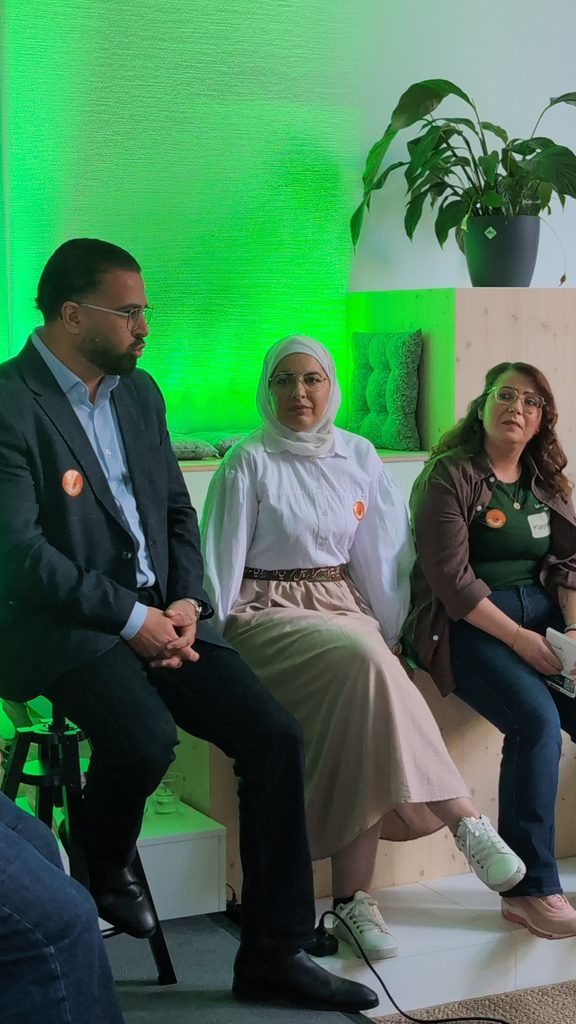
How different these paths can look was demonstrated by three founders who shared their personal stories with the participants at the launch event.
Manuela di Bari from KlarpressWerk originally came to Germany from Italy to study and subsequently worked in the food industry. Her enthusiasm for food eventually became the foundation of her own business. With her transparent oil manufactory, she focuses on fully traceable supply chains and aims to bring producers and consumers closer together again.
Omar Chehade of the Delmenhorst security service combines his self-employment with education and language. As a certified educational provider, the company offers German-Arabic language and security training, amongst other things.
Salam Halwani focuses particularly on migrant women through workshops, courses and consulting. The core focus is on orientation and empowerment – and thus supporting women in developing their own perspectives and charting their own course self-determinedly.
Three stories, three different business models – and at the same time experiences that many participants of the evening could relate to.
Between bureaucracy, language and support networks
Following the personal insights, the event continued in smaller groups. Using various guiding questions, the participants discussed their own experiences, challenges and ideas. Lively conversations quickly developed, which were then continued together with the three speakers.
Many questions revolved around how personal challenges could be overcome. At the same time, the discussion focused on the broader framework conditions: how does starting a business in Germany differ from other countries? What works well – and what less so? Which networks and support services genuinely help? And at what point do you simply have to get started despite all the uncertainties?
Bureaucracy and language were repeatedly cited as challenges. At the same time, participants highlighted the diverse range of support services that founders in Bremen can already utilise.
The offerings of Visionskultur also played a role in this. Manuela di Bari described the value of a place where setting up a business does not have to take place in isolation:
„Instead of sitting at home and staring at the screen, you can come to the hub, meet other founders, chat and work where others are also developing their ideas.“
Omar Chehade in turn reported on his experiences with coaching at Visionskultur:
„It was a huge help that during the coaching with Visionskultur I developed a proper master plan for the start-up process with my coach Karin.“
Thus, it also became clear that evening how important spaces for encounter, personal support and access to a network can be, alongside formal advisory services.
The start has been made
Following the joint discussion and loud applause, the evening continued with pizza and open networking. And although the official closing time of the Creative HUB had long passed, many participants were still deep in conversation, exchanging experiences, making contacts and continuing their discussions.
Precisely this exchange forms the basis for the next steps of Fokus.Migration. Because the roughly 50 perspectives from the first evening are not to be left hanging: in the forthcoming workshops they will be developed further, brought together with existing support structures and ultimately translated into concrete approaches to solutions.
The first workshop made it clear to everyone where the opportunities and challenges lie. Now it is about using these experiences to jointly develop paths that sustainably strengthen migrant and international startups.